Most “brand voice” docs are adjectives that would also describe a hotel chain: friendly, professional, innovative, human. Feed that to Claude or ChatGPT and you get the same cadence every intern has already seen — “delve”, “landscape”, “we’re excited to announce”. Content studios have been building more mechanical systems for this: Versely treats voice as four documents you maintain, Storyflow pins traits to their flip-sides, MindStudio splits profile, examples and tokens. The version I use with clients is smaller, because a one-person studio will not maintain a fifteen-section XML file. It still has to be strict enough to argue with.
Voice sits next to the hex codes
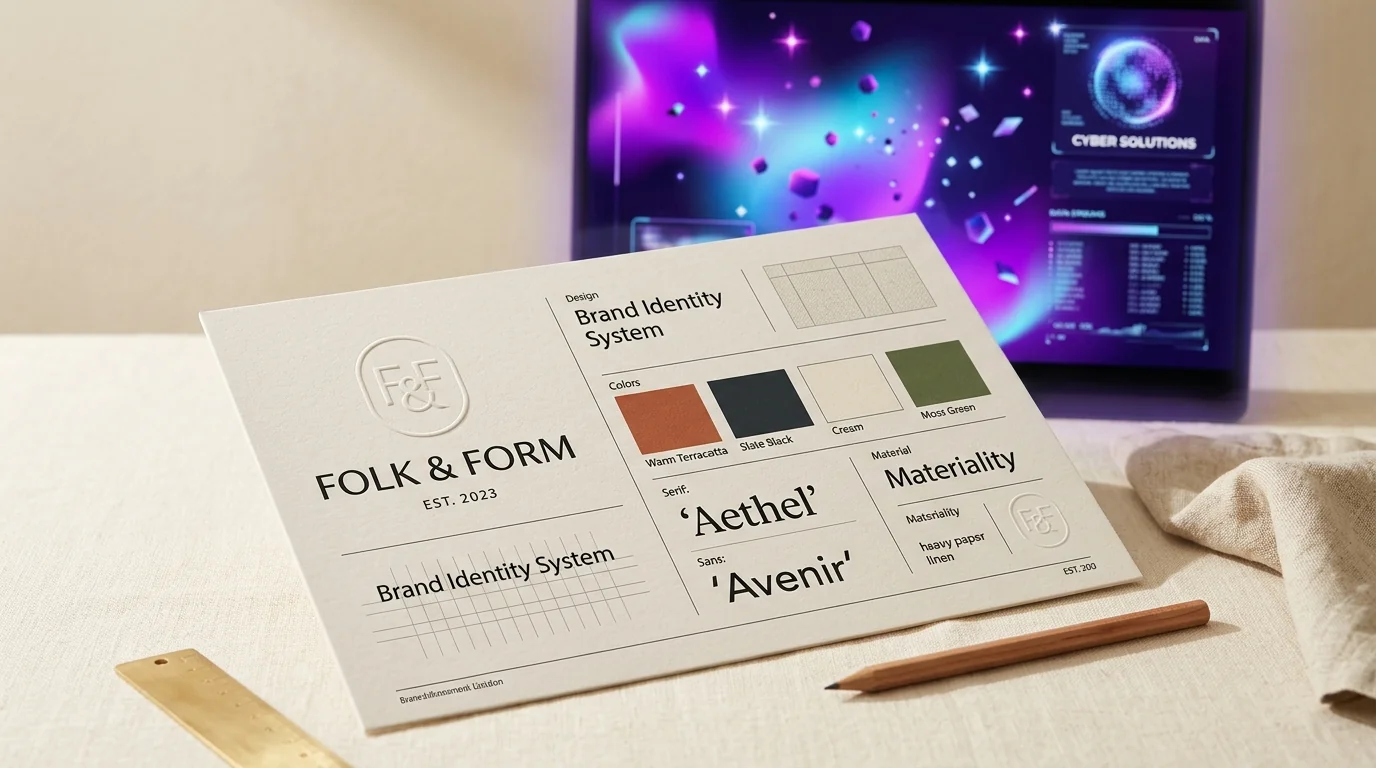
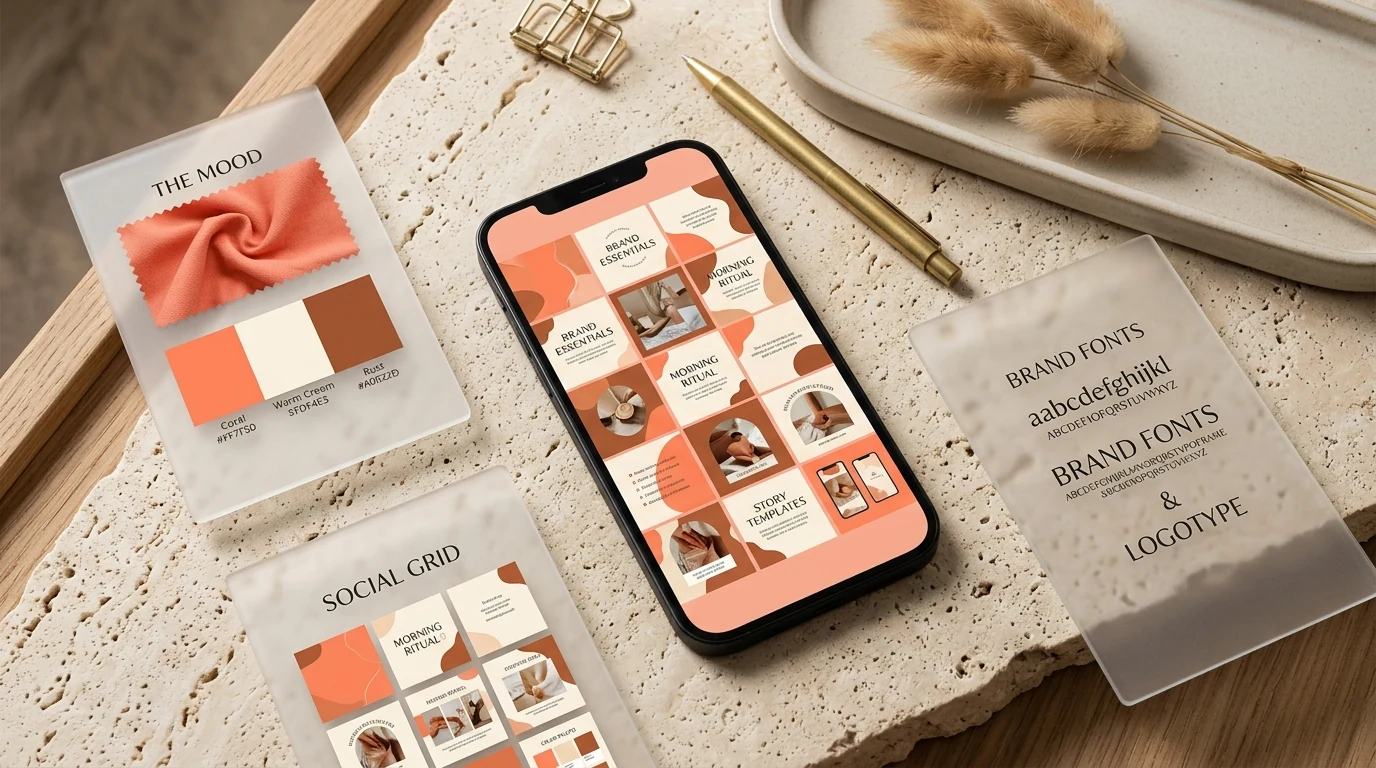
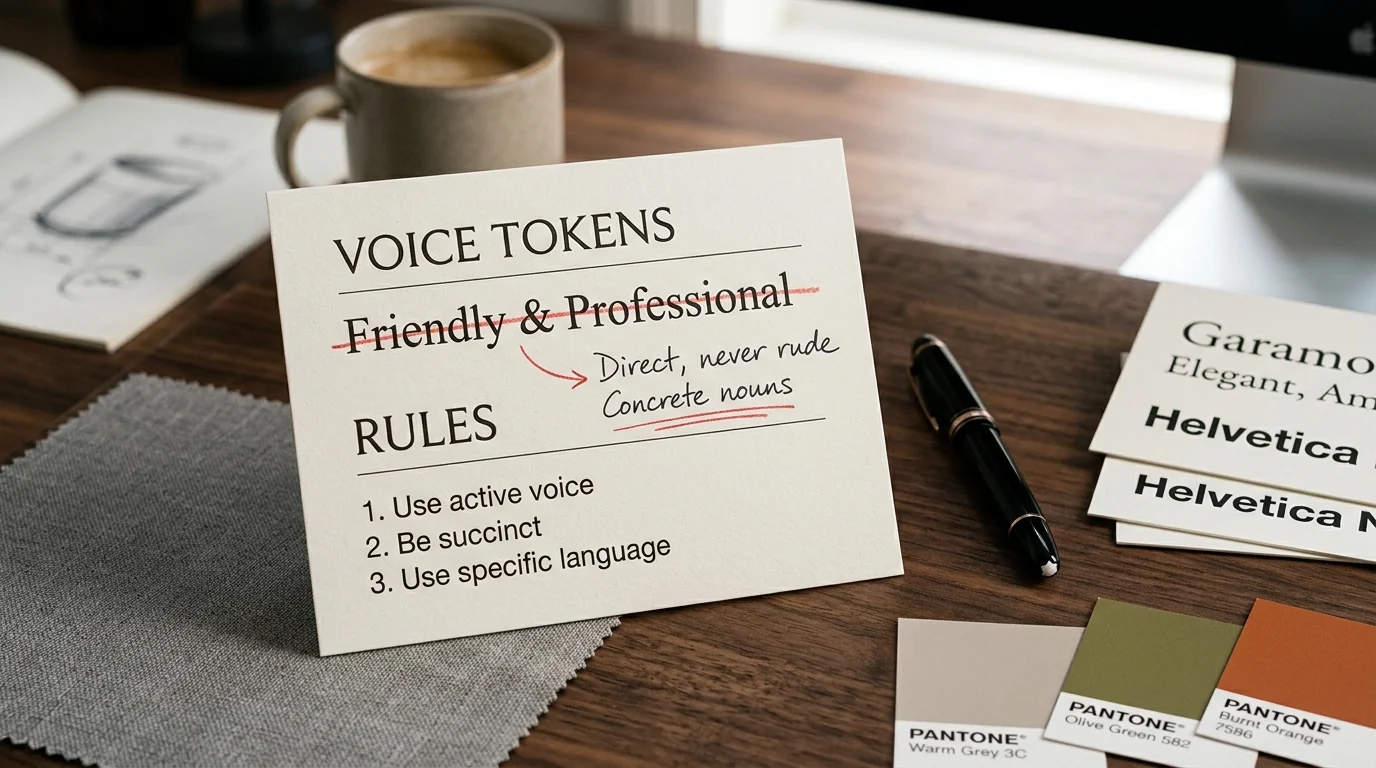
If colour is #F97B22 and type is Anton + Space Grotesk, voice is the third locked-core token. You would not tell a printer “make it kind of warm”. Do not tell a model “sound premium”. Write rules a junior can fail against. Three to five traits, each with a “this does not mean”. A short banned list. Point of view. Two tone modes (site vs social). Three real sentences you have already published that you would be happy to see imitated in rhythm, not in wording.
- Trait with a flip-side: “Direct, never rude.” “Warm, never cutesy.” “Technical, never opaque.”
- Banned list: synergy, leverage (verb), seamless, unlock, supercharge, delve, tapestry.
- Point of view: I for the studio owner’s notes, we only when a team actually did the work.
- Sentence habit: short first sentence. One concrete noun. No stacked metaphors.
- Proof examples: three URLs or pasted paragraphs from your own site, annotated in one line each.
If you cannot fail the voice test, you do not have a voice. You have a vibe.

The one-page card I paste above every draft
Keep this at the top of the thread. Change the traits to yours. Do not skip the banned list — it does more work than any adjective.
Voice card (paste above any writing prompt)
You are writing as SK.design (Sander Kuyken), a Belgian brand / web / motion studio. Voice: direct, never rude. Practical, never corporate. Opinionated about craft, never hype. POV: first person singular for process notes; “we” only for shipped client work. Sentences: short opener, concrete nouns, no stacked metaphors, contractions allowed. Never use: synergy, leverage, seamless, unlock, supercharge, delve, tapestry, “AI-powered” as a boast. Match the rhythm of this example, do not quote it: “AI made average faster. Distinctive still takes judgement.” Task: [paste the brief]
What to check: Run the same brief twice — once with this card, once without. If you cannot tell them apart, the card is still too vague.
Where a human still has to sit
Safe to draft with AI
- First pass of a case-study paragraph from bullet notes.
- Meta descriptions and alt text inside a locked vocabulary.
- Social variants of a line you already approved.
Keep human-owned
- Positioning: what you refuse, who you are for, the sentence on the homepage.
- Anything with a legal, pricing or promise claim.
- The last read-through before it goes live — models still invent confidence.
A voice card does not replace a designer. It stops the flexible layer (emails, captions, FAQ drafts) from sounding like a different company than the identity you paid for. That is the same job as a colour token. Treat it with the same seriousness and you can use models without sounding like one.