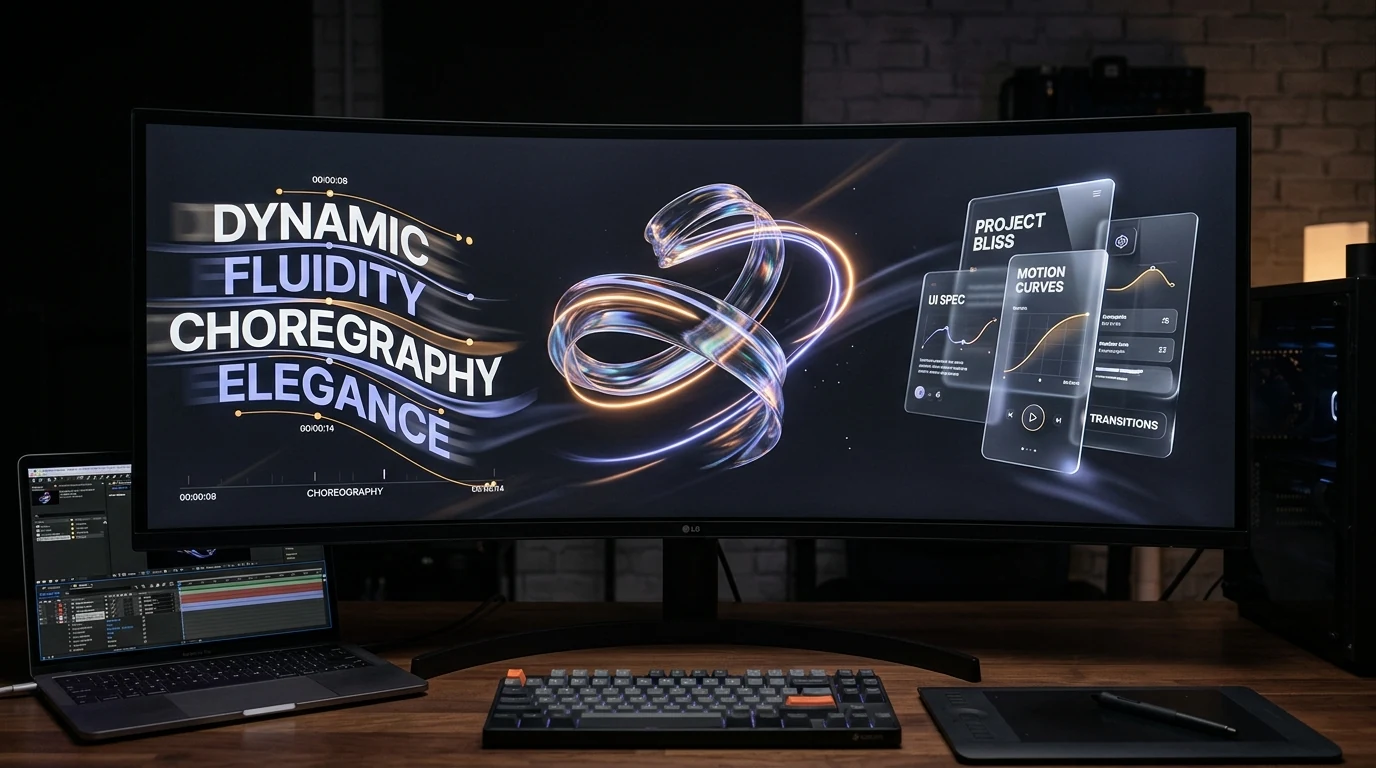
Flat 2D websites are no longer the ceiling for online brand storytelling. Thanks to widespread WebGPU standard adoption across modern browsers and lightweight Three.js engine pipelines, 3D product models, particle systems, and real-time lighting now run directly in the browser at 60fps.
Why spatial design dramatically boosts conversion & dwell time
When visitors can rotate a 3D product in real-time, inspect realistic glass and metal textures, or trigger custom particle effects via scroll interactions, engagement metrics surge. Interactive 3D transforms passive readers into active participants who spend 3x more time exploring your brand offer.

Key 3D Web Frameworks & Engines in 2026
Depending on your project scope, selecting the right WebGL/WebGPU library is essential for maintaining fast initial page loads:
- Three.js — The industry-standard Javascript 3D engine for custom WebGL and WebGPU rendering, shader materials, and camera control.
- Spline 3D — Collaborative 3D design tool built specifically for web export, interactive triggers, and easy React integration.
- Babylon.js — High-performance engine favoured for complex architectural visualizers and browser-based game mechanics.
- Draco Geometry Compression — Google’s 3D mesh compression library that shrinks GLTF file sizes by up to 90%.
Best practices for 3D web performance & optimization
- Mesh Optimization: Keep polygon counts under 50,000 tris for instant GLTF model loading.
- Draco & KTX2 Texture Compression: Convert PNG texture maps to GPU-compressed KTX2 formats to drastically reduce memory overhead.
- Lazy Canvas Loading: Always load heavy 3D canvases asynchronously via React.lazy so hero headline text renders instantly.
- Mobile Fallback: Provide high-quality WebP video loops or static renders for ultra-low-power mobile devices.
Motion and 3D in web design should never be decorative noise — they must serve the narrative, clarify product features, and elevate perceived brand quality.