Open ten AI product sites and you can play bingo: purple-to-cyan gradient, a glowing orb, a four-pointed sparkle, a geometric sans wordmark, and a headline that could belong to any of them. Studios writing about the category have said this out loud — Everything Design argues the cliché now hides what the company actually does, and D1S1 mapped how serious identity work in 2025–2026 is a retreat from that visual kit. This article is not a recap of those round-ups. It is a working rule for founders and small brands who use AI tools to look “modern” and accidentally look like everyone else.
The costume is doing the opposite of what you think
The cliché started as a shortcut for trust. The product is invisible — a model on a server — so the site borrows the visual dialect of “this is AI” so a buyer does not have to think. That dialect is now so loud that buyers skim past it. They are not reading the gradient. They are hunting for a proper noun: which job, which buyer, which outcome. If your first screen only says you are intelligent, you have told them nothing they can repeat in a meeting.
This is not only an AI-SaaS problem. Any local studio, coach, product or webshop that prompts Gemini or Midjourney for “futuristic tech branding, neural network, glowing core” imports the same costume. You did not join the AI category. You joined the average of the training set.
Looking like an AI company is the fastest way to become unmemorable in a market that already looks like an AI company.
What the interesting work is actually doing
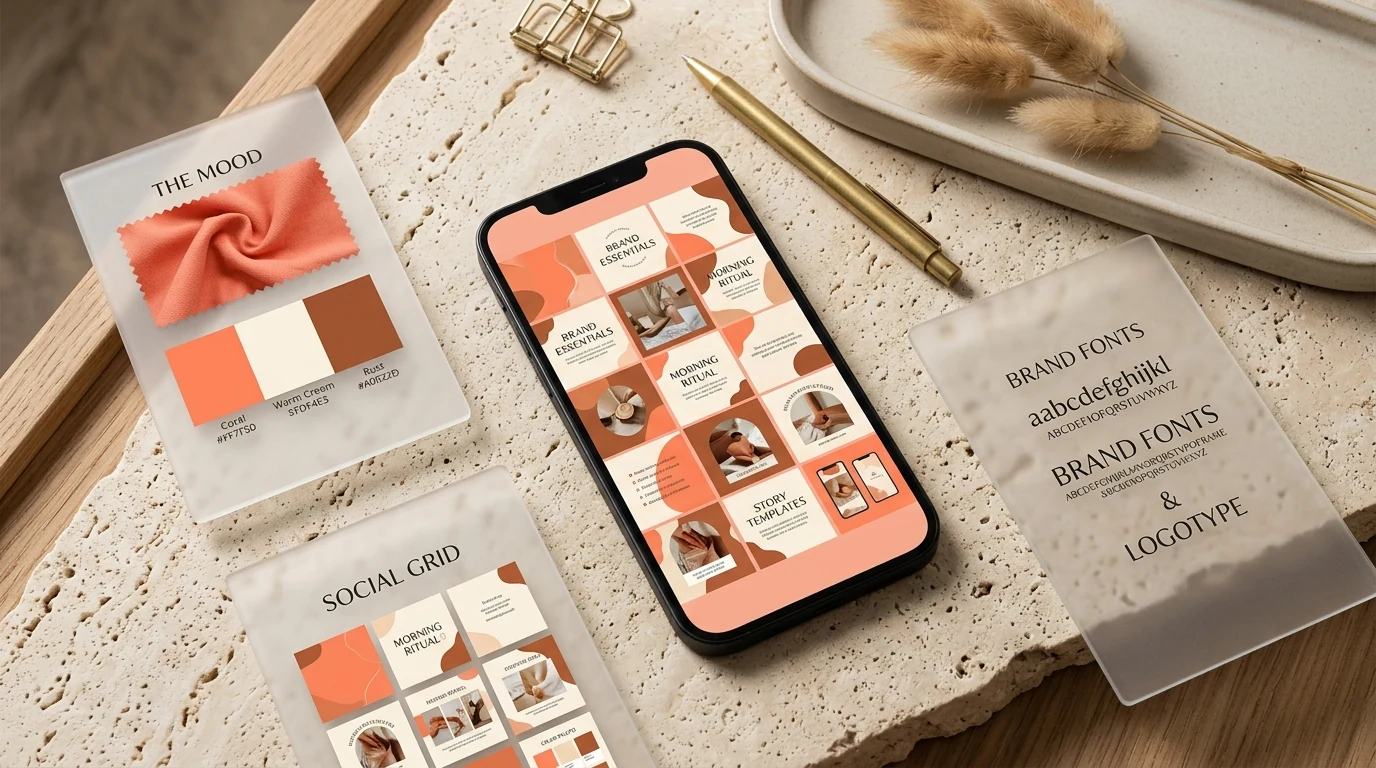
The case studies worth stealing from are not visualising intelligence. They are designing permission: why a lawyer, a clinician or a founder should trust this thing with messy real work. Ragged Edge’s Granola rebrand is the clearest public example — handwriting, a slightly imperfect G, warmth on purpose, against a category of sleek notepads. You do not need their budget. You need their refusal list.
- Refuse the sparkle / orb / neural mesh unless it is a joke you can defend.
- Refuse “AI-powered” as a name. Name the job: invoices, meetings, shelves, onboarding.
- Refuse novelty-for-novelty. Restraint reads as maturity faster than a new 3D blob.
- Make the invisible tangible: one illustration, one motion language, one object the buyer can picture.
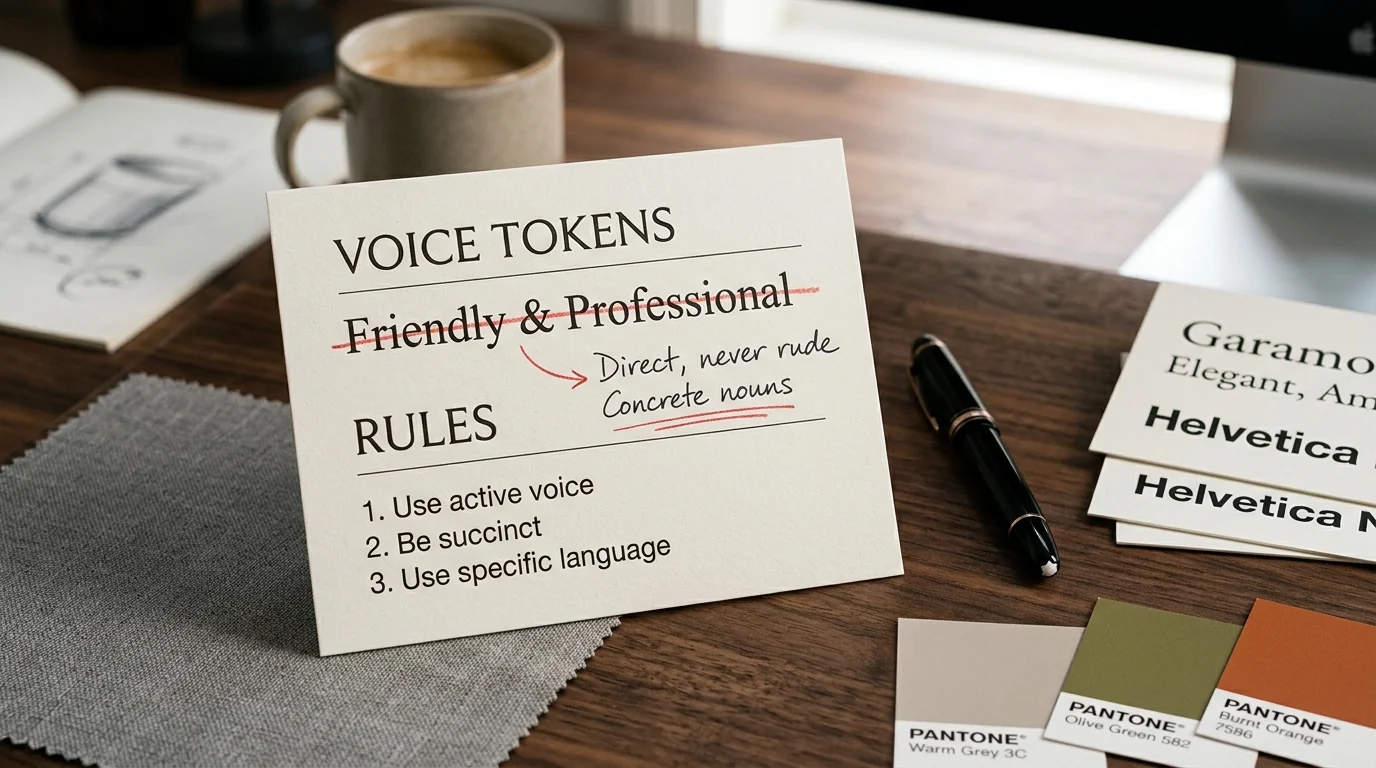
- Write one sentence a human would actually say about you. If it still works with the product name swapped, it is not yours yet.

A briefing test I use with clients
Before we open Figma, I ask three questions. If we cannot answer them, no amount of generated imagery will save the homepage.
- Category: what do we refuse to look like? Write five visuals that are banned, not five that are “on brand”.
- Buyer: who is afraid of looking stupid if they pick us? Design for that fear, not for a Dribbble shot.
- Proof: what can we show in ten seconds that is not a glow? A workflow, a before/after, a real environment, a numbered outcome.
Then we lock a small core — mark, colour, type, motion rule — and only then is AI allowed in the flexible layer (campaign stills, social crops, exploration). That split is how you get speed without averaging out. The Charged identity is a useful reminder: contrast and repeatable layouts beat a new “wow” every post.
If you generate the pictures, generate the opposite of the costume
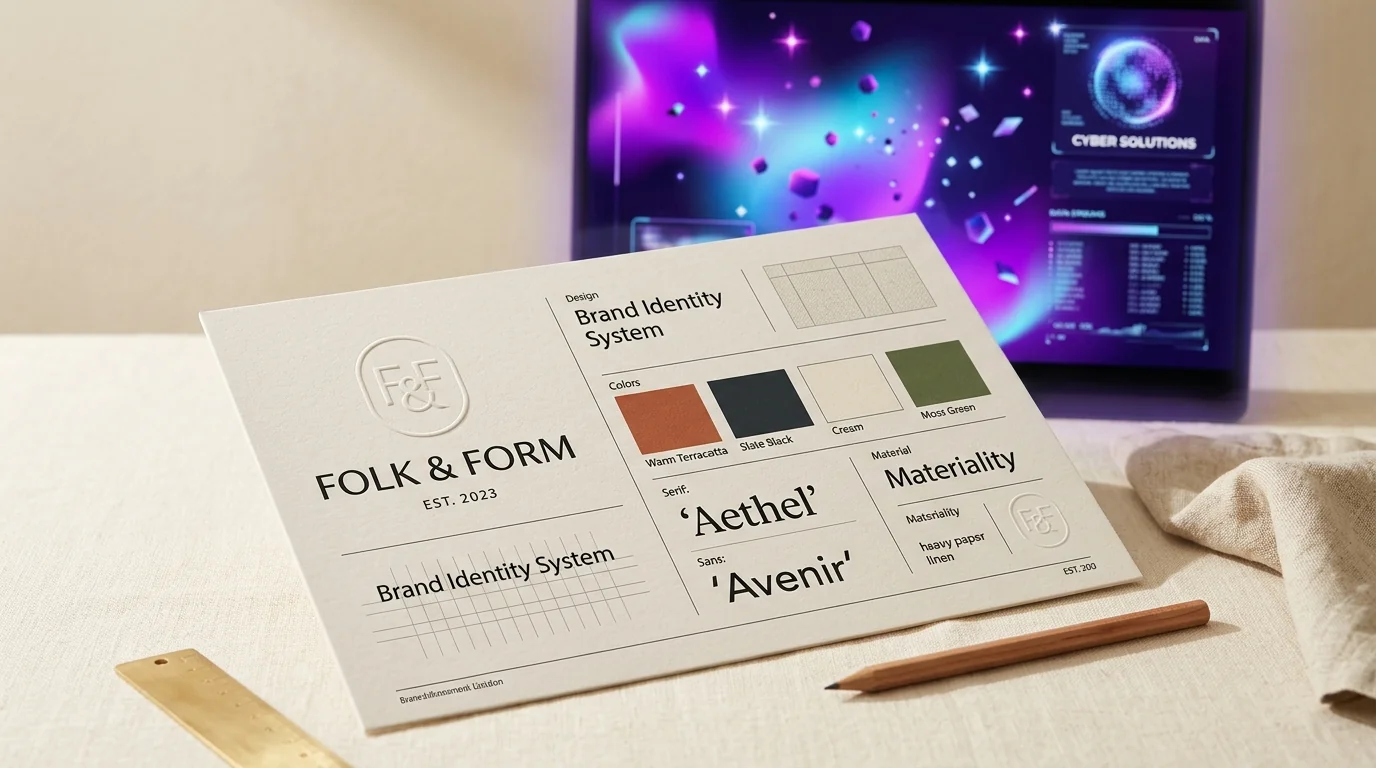
A model will happily give you the cliché because the cliché is statistically common. Your prompt has to be a fence. Paste this into Nano Banana when you need a still that could sit next to a real brand board — then throw away anything that still looks like a stock “AI startup” hero.
Anti-cliché brand still (Nano Banana)
Photoreal editorial still life, 16:9, cream paper studio table. One printed brand board in sharp focus: warm off-white stock, a slightly imperfect hand-inked mark, a single orange #F97B22 colour chip, black serif headline, lots of empty margin. Soft north-window daylight, 50mm lens, shallow depth of field. No glowing orbs, no neural networks, no four-pointed sparkles, no purple gradients, no holograms, no watermarks, no logos of real companies, no readable URLs.
Waar je op let: If the result still contains a glow, a sparkle or a purple wash, the model ignored the fence. Do not publish it.