Short-form video is built for interruption: fifteen to forty-five seconds, one hook, no second chance. Most brands fill that window with text overlays and stock B-roll. The clips that stick are the ones that make a single idea visible — and 3D is unusually good at that, as long as the metaphor carries the explanation instead of decorating it.
What a strong explainer short actually does
An explainer short is not a mini commercial. It is a compressed lesson. The best ones share three moves:
- One idea only — if you need a second beat, you need a second short.
- A visual metaphor the viewer can “get” without a voiceover dictionary — scale, motion, spatial contrast.
- A lasting pay-off — a final frame or line that makes the point stick after the scroll continues.
Where explainer shorts usually fail
- Too much plot: setup, characters and side stories leave no room for the actual idea.
- No pay-off: the clip ends mid-thought, so the viewer remembers nothing worth sharing.
- 3D as decoration: pretty lighting and camera moves that never clarify the product, feature or concept.
How I practice this on YouTube
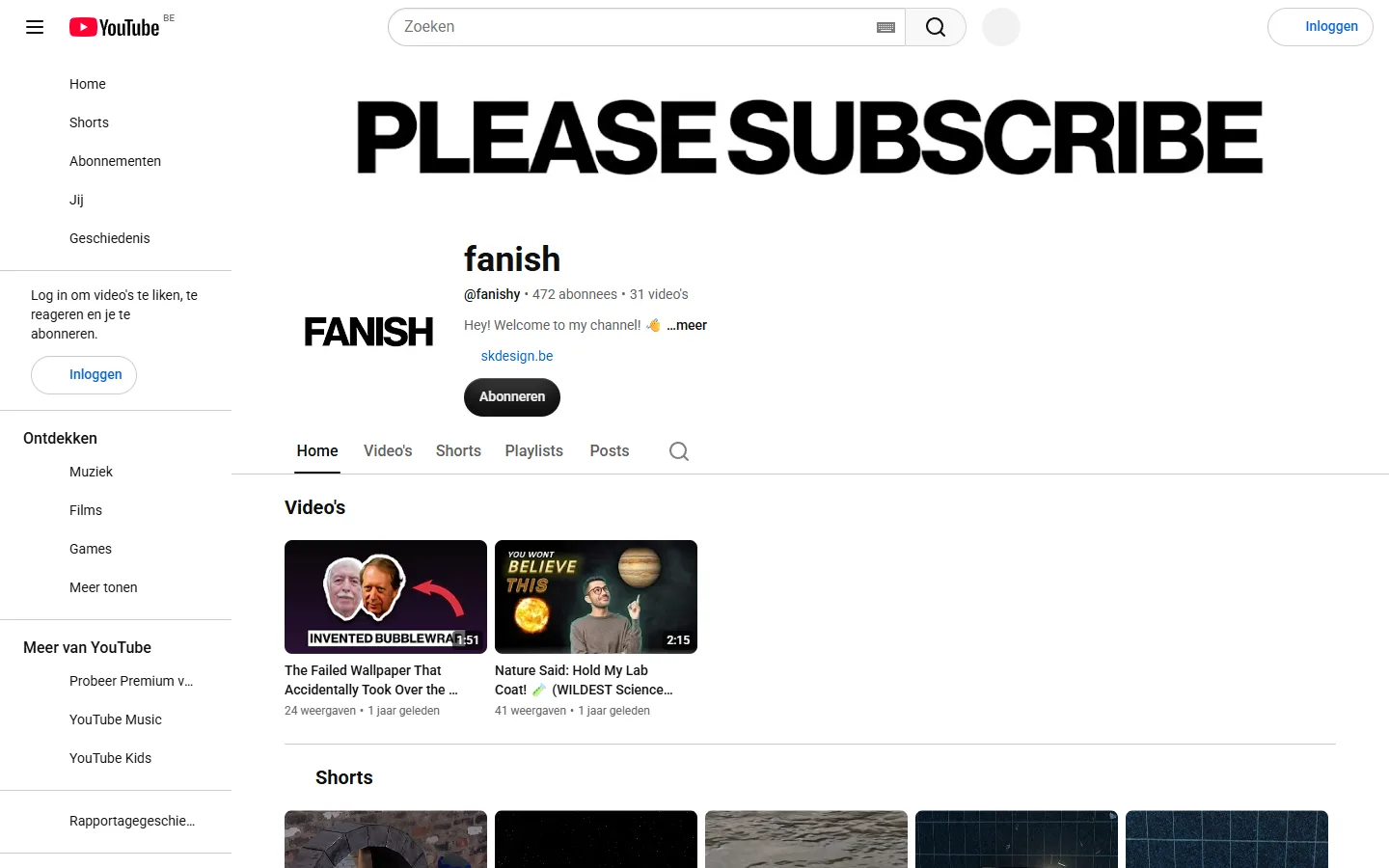
I keep a personal channel, Fanishy, where I publish 3D explain shorts. It is a practice ground: pick one concept, design a clear metaphor, cut hard, ship. That rhythm sharpens timing, visual hierarchy and the habit of explaining with pictures instead of paragraphs — the same craft brands need when a product, feature or onboarding flow has to land in a feed.
What brands can use this format for
Under SK Design, the same explainer craft becomes client work. Typical fits:
- Product explainers — show how something works before a prospect opens a long landing page.
- Feature walkthroughs — one capability, one visual sequence, no feature dump.
- Onboarding and education — reduce support friction by making the first “aha” visual.
- Social motion — feed-native clips that feel intentional, not like a cut-down of a 60-second brand film.
Clarity beats spectacle. If the 3D looks expensive but the idea is still fuzzy, the short failed.